Men, like women, are susceptible to fluctuations in fashion. Desirable looks change and individual style is personal. However, there are certain body aesthetics that are universal. Most men want a smooth, flat chest. It is one of the things that the human eye associates with the masculine ideal. This has been the case since the days of the Greeks and Romans and it is still true today. Unfortunately, not all men are born with this ideal. Others, due to lifestyle choices, age and hormones, for example, may develop an abundance of glandular tissue and/or fat that results in “man boobs”. The medical term for this condition is gynecomastia. With more and more men embracing hormone replacement therapy (HRT) for low testosterone, many want to know: Does testosterone cause gynecomastia?

HRT and Gynecomastia
Hormone replacement therapy for men with low testosterone may have a myriad of health benefits such as increased:
- Libido
- Energy levels
- Muscle mass
- Bone density
It is imperative, however, that you have your hormones tested with a trusted physician such as a urologist or endocrinologist. The internet can be a great resource for educating yourself, but it may also be misleading. Hormones affect every aspect of your body, so you do not want to mess with them without doctor supervision. If you are someone with low testosterone, know that taking HRT is generally not associated with gynecomastia.
Anabolic Steroids Can Cause Gynecomastia

While HRT is not considered a risk factor for developing gynecomastia, injected high doses of testosterone are a different story. Anabolic steroids, which many men have and do use to build muscle mass, can throw off the balance between your testosterone and estrogen levels. The increased testosterone converts to estrogen which results in breast tissue growth. If you use steroids and have developed gynecomastia, it is smart to be evaluated in-person by a Board-Certified Plastic Surgeon, such as myself, who specializes in male body contouring. It is also critical during our consultation that you be very honest about your steroid usage.
Surgery can help improve the effects of anabolic steroids on your chest, but if you are not up-front about your usage and/or decide to stay on the steroids and seek gynecomastia surgery, then you need to understand that there is a very high probability that the condition will return no matter how talented your surgeon.
Gynecomastia Treatment Options in Boston
Gynecomastia is not something that any man wants. But there are a number of effective treatment options for improving your chest contour. The right one is going to depend on the underlying cause of your gynecomastia. Treatment options include:
- Chest Liposuction
- Male Chest Reduction Surgery
- Extended Gynecomastia Surgery
Most men are adverse to the idea of surgery of any kind. So, almost every patient who comes in to discuss gynecomastia asks about chest liposuction. This can be a great option if the excess in your chest is due to fat alone. Keep in mind that if what is bothersome to you about your chest is due to glandular tissue, liposuction will not be the only solution.
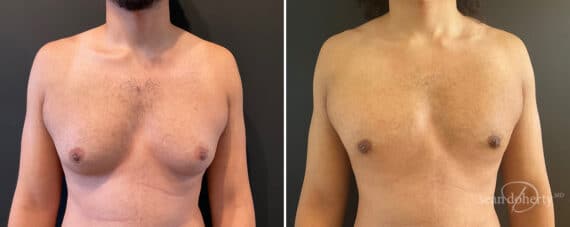
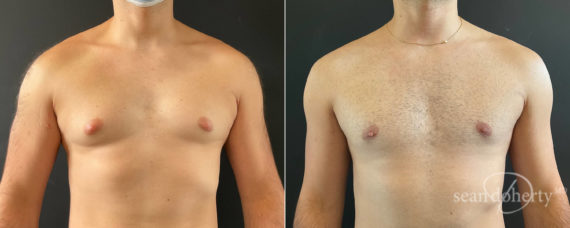
For those men whose condition is due to excess glandular tissue, male chest reduction surgery, either on its own or with liposuction if excess pockets of fat are also at play, is going to be your best treatment option. While the idea of surgery on your chest may sound daunting, I practice exemplary surgical techniques that put as little tension as possible on the incision lines. Furthermore, most men are so thrilled with their new chest contour that they are not the least bit bothered by any faint, residual scarring. For men who have had significant weight loss or who have a chest that may resemble a true breast-like shape, a more significant procedure with more incisions may be recommended.
To find out more about gynecomastia, or any other surgical or non-surgical procedure with Dr. Sean Doherty at his Boston or Chestnut Hill office, contact us today or call (617) 450-0070 to schedule a consultation.