The positive benefits of GLP-1 weight loss drugs such as Ozempic, Zepbound and Mounjaro are astounding. Tens of millions of people in this country alone who have struggled with excess weight and the myriad associated health problems like diabetes and high blood pressure are now able to live much healthier lives on a GLP-1. Furthermore, many report a distinct decrease in mental chatter and obsessive behavior. This could be a game changer in treating all forms of addiction, including compulsive and emotional overeating. In short, these medicines are radically changing our health landscape for the better although, in my opinion, they should be prescribed by and monitored, in person, by physicians or nurse practitioners. There are also downsides to losing a lot of weight, particularly if it is done quickly. “Ozempic Breasts” is a term that has been coined to describe the adverse effect that a GLP-1 can have on the appearance of your breasts. This may include volume loss, sagging skin and implant palpability in those patients who have had a prior breast augmentation.
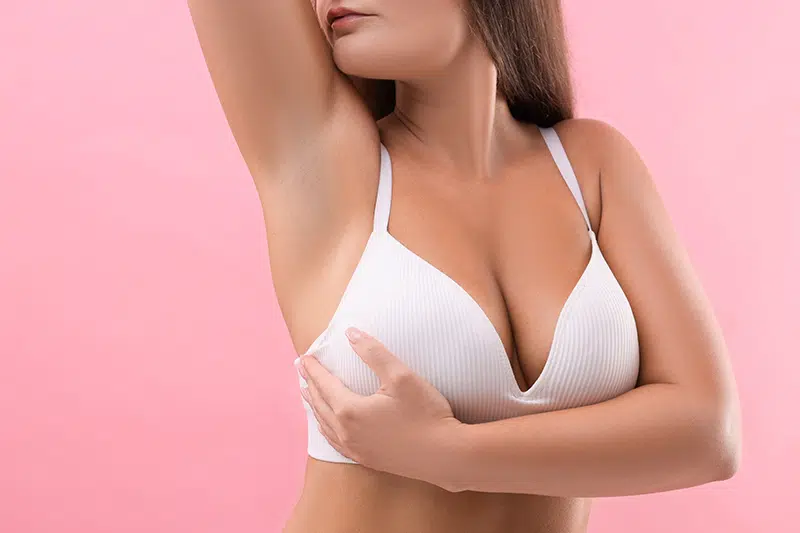
Board-Certified Plastic Surgeon, Dr. Sean Doherty, is an expert in all areas of breast surgery. Highly respected, he has devoted his career to helping women in Boston to feel more comfortable in their skin by improving their breast shape. His goal with any breast procedure is to restore proper proportion throughout the torso. This is particularly critical with Ozempic Breasts as the issues with intense weight loss are not simply about decreased size. Many women also experience a thinning of the skin as well as a breakdown in the tissues that provide lift and support. There are a number of different breast surgery options for improving the appearance of Ozempic or weight loss breasts. The right one for you is going to depend on your individual anatomy, desired outcome and lifestyle. For this reason, it is always best to schedule an in-person consultation.
Ozempic Breast Consultation in Boston
Losing excess weight that you may have carried around for decades can have an incredibly positive effect on your self-esteem. However, it may also be frustrating to finally be able to fit into those skinny jeans and yet have breasts that are now much smaller or hang downward. If you have recently lost ten pounds or more with a GLP-1 such as:
- Ozempic
- Wegovy
- Mounjaro
- Zepbound
You may notice an unwanted change in the appearance of your breasts. Volume loss is an obvious side effect of weight loss, but so is looseness in the skin and tissues of the breast. During your consultation, Dr. Doherty will listen attentively to your weight loss journey and what now bothers you about your appearance. He will ask in-depth questions about your medical history, family history, lifestyle, prior procedures, and how your body reacted as well as your willingness to continue on a GLP-1. Next, he will perform a thorough physical exam to assess:
- Skin tone & texture
- Breast volume
- Implant position if applicable
- Nipple placement in relation to the inframammary fold
- Previous surgeries
Together, you will discuss the appropriate treatment plan for delivering on your goals.
Breast Augmentation for Ozempic Breasts
Volume loss is an inevitable side effect of weight loss. The problem is that you do not get to pick and choose where this loss occurs. The breasts are often quite affected. If you find yourself with deflated breasts that no longer have the heft, plumpness and shape that you desire, a breast augmentation with an appropriately sized implant could be for you. Generally, Dr. Doherty uses a round, silicone gel breast implant placed below the muscle or fascia because he has found it to deliver the most natural look and feel. However, some patients are averse to the idea of silicone so for them, a saline implant is going to be best. Furthermore, very fit patients with little body fat may do better with implants placed above the muscle along with the addition of fat grafting to the breast in order to provide further camouflage. All of these options will be discussed with you in detail during your initial consultation.
Breast Lift for Sagging Skin Post GLP-1 Weight Loss
There are a number of factors that may affect the quality of your skin after weight loss with Ozempic. These include:
- Quantity of pounds
- Speed of weight loss
- Health of breast skin & tissues
- Age
- Hormones
- Pregnancy
- Breastfeeding
Anytime that you gain and then lose weight, it stretches the skin. Oftentimes, particularly depending on your age and hormone levels, your skin may no longer have the capacity to “bounce back” and tighten over your new smaller size. The end result could be sagging breasts. One of the easiest at home methods to determine whether this might be you is to look at your nipple position in the mirror. Are they centered on your chest mound, or do they rest at or below the inframammary fold which is the crease beneath your breast? If it’s the latter, you are probably going to be a candidate for a breast lift. This can be a stand-alone procedure for those women with a desirable amount of breast volume, or Dr. Doherty may add a breast implant and/or fat grafting to the breast in order to create the best shape for your body.
-

- lilnob
What is Fat Grafting to the Breast?
As the name implies, fat grafting to the breast is a procedure in which Dr. Doherty removes fat via liposuction from an area where you have too much and places it into the breasts. For patients who only want a small increase in volume, fat grafting may be a stand-alone procedure. However, the outcome is not as predictable or as robust as with a breast implant. For this reason, Dr. Doherty typically combines fat grafting to the breast with a breast augmentation and/or breast lift as a way to adjust shape. It can be great for creating more upper pole fullness which is a highly desirable look for most patients. And, as discussed, it may also provide padding to camouflage the edges of an implant in very fit or thin women.









Soft Tissue Support (STS) for Long-Lasting Result
Another popular add-on procedure for improving the shape of Ozempic Breasts and the longevity of your breast augmentation and/or breast lift result is soft tissue support (STS). Made of P4HB, which is a biologically derived polymer that has been safely used for decades in surgery, STS is a mesh that is placed in the bottom of the breast to provide additional support in those patients with compromised tissue. Over time, the mesh itself dissolves and you are left with an internal support structure of your own tissue that is 2-4 times stronger than your native breast tissue. The benefits are numerous such as allowing women with weak skin and tissue to place a larger implant and know that it will be less likely to move out of position over time. Use of STS for breast surgery is considered off label. Dr. Doherty will thoroughly review the benefits of a mesh device with you during your surgical preparation.
Breast Implant Exchange to Improve Ozempic Breasts
Women who have undergone a prior breast augmentation and then lost a lot of weight with Ozempic may find that their implants are now more visible, palpable and/or have moved out of position. A breast implant exchange is a procedure in which Dr. Doherty replaces your old implant with a new one. Rarely is this an even exchange as your skin and tissues have most probably degraded since your original surgery. In general, a breast implant exchange will entail a new breast implant with STS, fat grafting to the breast and possibly a breast lift. This may sound like a lot, but the goal is to create the right shape for your new, slim contour.
To find out more about Ozempic breast surgery options, or any other surgical or non-surgical procedure with Dr. Sean Doherty at his Boston or Chestnut Hill office, contact us today or call (617) 450-0070 to schedule a consultation.