Breast implant rippling occurs when folds or wrinkles in a breast implant become visible through the skin or can be felt through the breast tissue. While breast augmentation can have a profoundly positive effect on both how you look and how you feel, it is not without potential complications, including implant rippling. In my practice, my goal is to create a result that looks and feels as natural as possible while reducing the risk of issues like visible or palpable rippling.
Choosing the right breast implant for your anatomy and needs is an important part of creating a balanced, proportional result. When the size, shape, and placement of an implant complement your natural breast tissue, breast augmentation may help you feel more confident and comfortable in your skin. As a Board-Certified Plastic Surgeon who specializes in breast surgery, I carefully consider these factors before surgery because implant selection and surgical planning can play an important role in preventing rippling. Below, I’ll explain what causes breast implant rippling, how I try to prevent it, and the treatment options I may consider when it occurs.

Key Takeaways
- Breast implant rippling occurs when folds or wrinkles in an implant become visible or can be felt through the breast tissue.
- Thin tissue coverage, implant placement, implant type, and how well the implant fits your anatomy can all affect the risk of rippling.
- Treatment may involve implant exchange, pocket adjustment, a breast lift, soft tissue support, or fat grafting, depending on the cause.
- Careful implant selection and surgical planning can help reduce the risk of visible or palpable rippling.
What Causes Breast Implant Rippling?
When patients ask me what causes ripples in breast implants, I explain that it is usually related to a combination of the implant itself, how it is positioned, and how much natural tissue is available to cover it. Some of the most common factors include:
- Saline implants tend to show folds and ripples more easily than silicone implants, particularly in patients with thinner breast tissue.
- When an implant is positioned above the chest muscle, there may be less tissue covering it, which can make rippling easier to see or feel.
- An implant that is not well matched to a patient’s breast dimensions, tissue quality, and anatomy can place unnecessary stress on the surrounding tissues and make rippling more noticeable.
- Patients with naturally thin breast tissue or skin may be more likely to see or feel the edges and folds of an implant.
Because there is no single cause of rippling in breast implants, prevention starts with understanding your anatomy and choosing an implant and surgical approach that work with your natural tissues rather than against them.
Treatment Options for Breast Implant Rippling in Boston
While the best way to avoid breast implant rippling is to reduce the risk before it happens, what do you do if that ship has already sailed? The right treatment will depend on why the implant is rippling in the first place. Options may include:
- Exchange a saline implant for silicone: If the implant itself is contributing to visible folds, changing implant type may help reduce their appearance.
- Reduce or reshape the implant pocket: If the pocket is too large or the implant has shifted, adjusting the pocket may improve implant position and support.
- Change the size or style of the breast implant: Sometimes a different implant is a better match for the patient’s anatomy and available breast tissue.
- Re-drape the breast skin with a breast lift: This may be appropriate when stretched or sagging skin is contributing to the appearance of the breast.
- Add soft tissue support such as GalaFLEX®: In selected cases, additional internal support may help reinforce weaker breast tissues.
- Fat grafting to the breast: When limited tissue coverage is making the implant more visible, adding the patient’s own fat may provide additional coverage over the implant.
The right option for you depends on whether the rippling is related to the implant, the pocket, your natural tissue coverage, or a combination of these factors. This is why I always begin by identifying the cause before recommending revision surgery.


Breast Augmentation Consultation
Because many of the factors that contribute to breast implant rippling can be evaluated before surgery, prevention begins during the consultation. Improving your body contour with a breast implant is always a balance between art and science, between your desired outcome and what your anatomy can sustain.
During our meeting, I will listen to what bothers you about your appearance and what you hope to achieve. Many new breast augmentation patients bring photos of how they would like to look, which can be incredibly helpful. I will also ask about your medical history, family history, prior procedures and how your body responded. Then, I will conduct a thorough physical exam to assess:
- Native breast volume
- Nipple position in relation to the inframammary fold
- Breast skin tone and texture
- Degree of sagging, if any
- Amount and quality of soft tissue available to cover an implant
Together, we will discuss the treatment plan that best fits your anatomy and goals. Every body is unique, which is why the internet can sometimes be misleading. Your favorite influencer may look great with a 300cc implant, but that does not mean the same implant will be right for you.
Why Breast Implants Are Like Goldilocks
When it comes to choosing a breast implant, I want you to remember the story of Goldilocks and the three bears. We are looking for the range of implants that is just right for your body.
Sometimes, the look a patient wants may not be possible with their unique anatomy. An implant that is too large for the available breast tissue can place excessive stress on the skin and supporting tissues over time, increasing the risk of problems such as implant malposition and visible rippling. But implant size is only part of the equation. Implant dimensions, fill characteristics, tissue quality, pocket size and placement all need to work together.
My goal is to choose an implant that improves your body contour while providing the best possible soft tissue coverage and reducing the risk of complications such as breast implant rippling.


To find out more about a breast augmentation, breast revision surgery, or any other surgical or non-surgical procedure in Boston or Chestnut Hill, contact us today or call (617) 450-0070 to schedule a consultation.
Frequently Asked Questions About Breast Implant Rippling
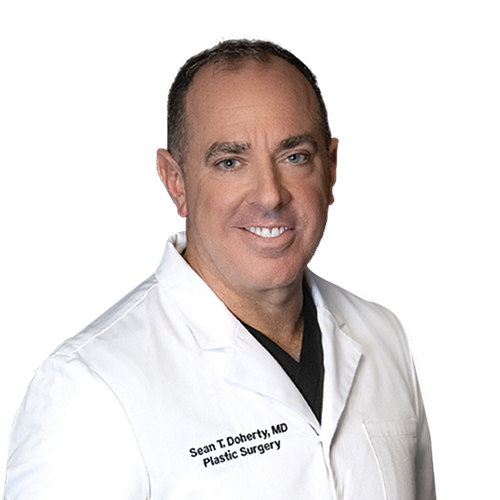
Sean T. Doherty, MD, FACS, is a board-certified plastic surgeon and Boston native with experience in surgical and non-surgical aesthetic procedures. His practice includes facial aesthetics, breast surgery, body contouring, liposuction, injectables, and laser-based treatments. Dr. Doherty’s approach emphasizes individualized treatment planning, patient safety, and natural-looking results.
Relevant Credentials
- Medical Degree: Tufts University School of Medicine
- Board Certification: American Board of Plastic Surgery
- Professional Experience: Boston Center for Plastic Surgery, 2014–present
- Medical Leadership: Associate Medical Director, Cynosure Lutronic
Areas of Expertise
Facial aesthetics, breast surgery, body contouring, liposuction, injectables, and laser-based aesthetic treatments.