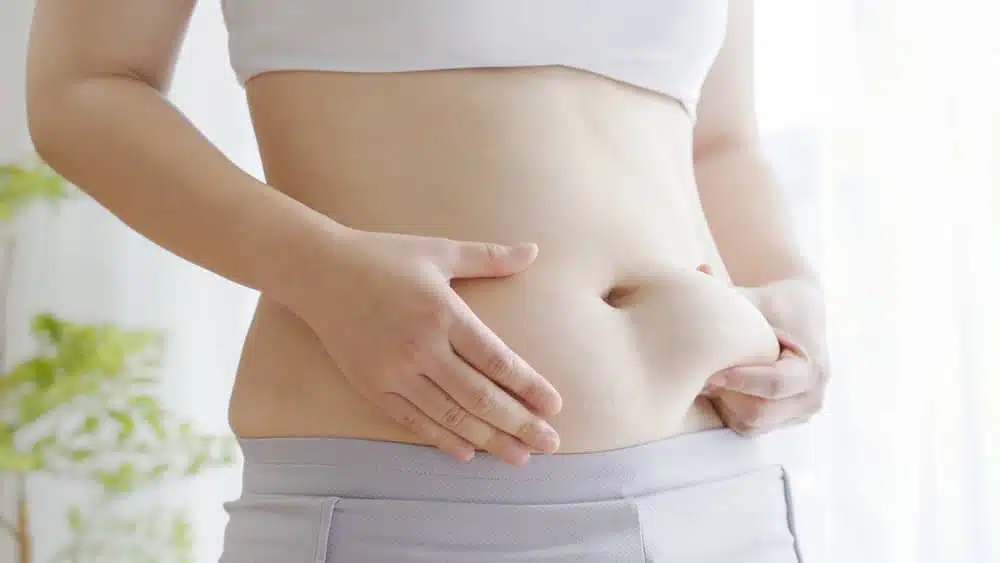
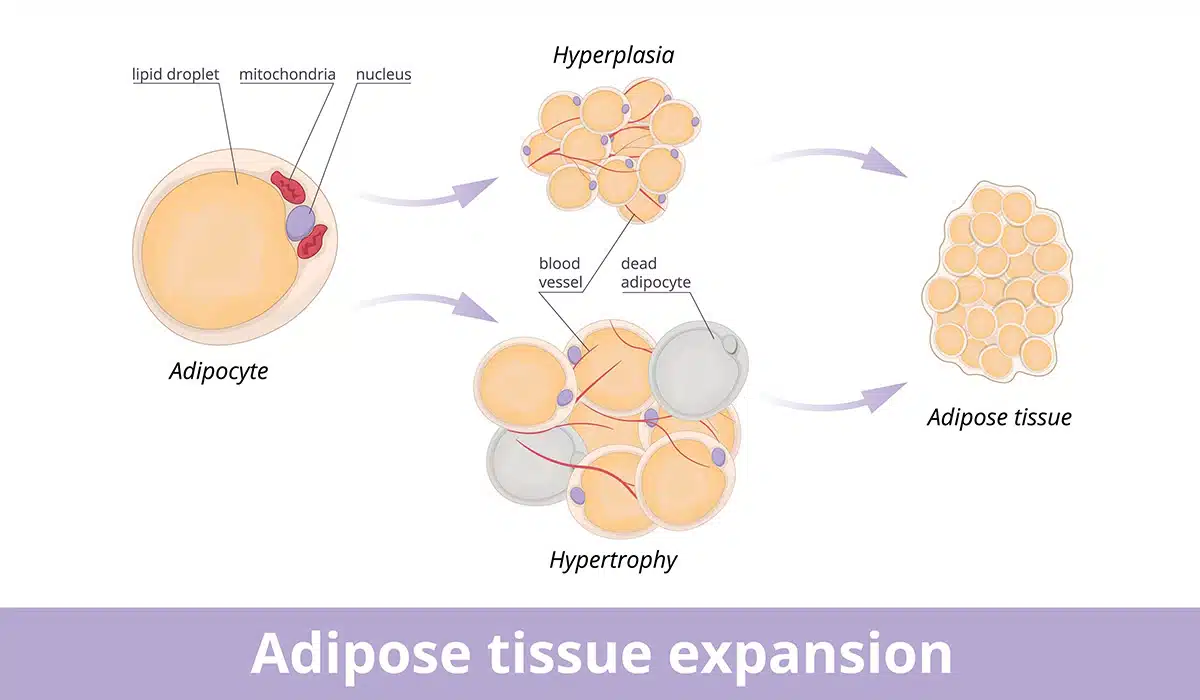
Paradoxical adipose hyperplasia (PAH) is a rare but real side effect that can happen after a fat-freezing treatment called cryolipolysis, often known by the brand name CoolSculpting. Instead of the treated fat gradually shrinking after cryolipolysis, the affected adipose tissue enlarges and becomes firmer over time.
This change usually doesn’t show up right away. It can take weeks or even months after treatment to become obvious, which is why many people feel confused or worried when it happens. While PAH is not dangerous to your health, it does not go away on its own and can be upsetting for people who were expecting a slimmer result.
Quick Facts About Paradoxical Adipose Hyperplasia
- Paradoxical adipose hyperplasia (PAH) is a rare complication of CoolSculpting® in which treated fat becomes larger instead of smaller.
- PAH usually develops gradually within 2–6 months after cryolipolysis treatment.
- Common symptoms include a firm, well-defined bulge, tissue thickening, and enlargement in the treated area.
- PAH typically does not resolve on its own and often requires corrective liposuction or surgical treatment.
- Men, abdominal treatments, and repeated CoolSculpting® procedures may increase the risk of developing PAH.
What is Paradoxical Adipose Hyperplasia?
Paradoxical adipose hyperplasia (PAH) is an adverse effect of cryolipolysis. This is the medical term for the process by which CoolSculpting® destroys the fat cells in the treatment area. It damages them by reducing their temperature. In most cases, the procedure is extremely effective. However, certain patients have the exact opposite response. Instead of going away, the fat cells in the treatment area gradually enlarge. While it can take anywhere from a few days to 6 months after treatment for PAH to develop, here are a few of the warning signs:
Common Symptoms of Paradoxical Adipose Hyperplasia
- Firm or rubbery enlargement in the treated area that becomes more noticeable over time.
- A well-defined bulge or mass that may mirror the shape of the CoolSculpting® applicator.
- Thickened fatty tissue that feels harder than normal post-treatment swelling.
- Enlargement that develops weeks to months gradually after cryolipolysis.
- Visible contour irregularity or asymmetry instead of the expected fat reduction.
- Mild tenderness or sensitivity in some patients, although PAH is often painless.
PAH was originally thought to be a rare occurrence of about 1 in every 4,000 treatment cycles (incidence rate of 0.025%). However, recent data show that it may be more common than originally thought.
How Paradoxical Adipose Hyperplasia Is Diagnosed
Paradoxical adipose hyperplasia (PAH) is diagnosed primarily through clinical evaluation, rather than laboratory tests or imaging. A plastic surgeon will assess the treated area based on the patient’s history, timing of changes, and physical examination findings.
PAH is typically suspected when:
- The treated area gradually enlarges instead of shrinking after cryolipolysis
- The tissue feels firm, dense, or well-defined, often with a shape that mirrors the applicator
- The change becomes noticeable weeks to months after treatment, rather than immediately
- The enlargement persists or worsens beyond the normal post-treatment swelling period
In the early stages, PAH can be mistaken for temporary swelling or inflammation following CoolSculpting. However, unlike normal post-procedure changes, PAH does not improve with time and instead becomes more pronounced. Imaging studies are rarely required, but may occasionally be used to rule out other causes of a mass if the diagnosis is uncertain.
Because timing and tissue texture are key diagnostic clues, patients need to inform their surgeon of any prior cryolipolysis treatments when evaluating an unexpected contour change.
Risk Factors for PAH
While there is still more unknown than known about the definitive causes of PAH, here are a few of the factors that could put you at a higher risk:
- Gender – men are three times more likely than women to develop PAH
- Prior CoolSculpting® procedure
- Use of a large handpiece during the procedure
- If you are of Hispanic or Latin descent
- Cryolipolysis to the abdominal region
- Genetic predisposition
One of the simplest ways to reduce your risk of developing PAH is to choose a different body contouring procedure, such as SculpSure® or liposuction.
Is paradoxical adipose hyperplasia cancerous?
Paradoxical adipose hyperplasia is a non-cancerous condition, yet it can cause major disfigurement. This can lead to emotional distress for those affected by it.
Does paradoxical PAH go away on its own?
Paradoxical hyperplasia is not dangerous, but without treatment, it won’t disappear. Patients usually have to wait between 6 and 9 months before the fat in the affected area can be sufficiently softened and safely removed using liposuction as corrective surgery to avoid the potential recurrence of PAH.
It’s important to tell your plastic surgeon if you’ve gone through CoolSculpting and are experiencing the “stick of butter” so that they can assess the area and advise on what to do next.
How Paradoxical Adipose Hyperplasia Is Treated
PAH is not physically dangerous, but as you know, it will not solve itself without treatment, and even with treatment, if you don’t wait for it to soften first, there is a risk that it will recur. Surprisingly, the way to fix paradoxical hyperplasia caused by non-surgical methods is through surgical liposuction. Unfortunately, you have to wait a few months after developing paradoxical hyperplasia before you can have liposuction.
At the Boston Center for Plastic Surgery, we specialize in creating ideal body shapes with both surgical and non-surgical methods. After corrective liposuction, you will get the curves you wanted from CoolSculpting. People who had liposuction due to paradoxical hyperplasia were very pleased with their new silhouettes.

Getting Rid of Fat With CoolSculpting
CoolSculpting is a widely known and widely used non-invasive procedure for reshaping the body. It works by reducing the temperature of fat cells, which causes them to become inactive and unable to store fat. After undergoing CoolSculpting, these cells will gradually break down and be eliminated from the body through the lymphatic system 3-6 months after treatment.
CoolSculpting allows you to achieve a slimmer, more defined appearance without the need for surgery. After a series of treatments (typically 2-3), your body will adapt to its new contours, and you can expect to see a significant fat reduction. This cosmetic procedure is typically performed in a series of sessions and is a more convenient and less disruptive alternative to surgical procedures like tumescent liposuction. CoolSculpting freezes away fat from the tummy, hips, thighs, arms, chin, and waist.
CoolSculpting is popular among both women and men because it allows for subtle, gradual fat loss. It also carries a low risk of side effects, which may include temporary swelling, tenderness, or redness in the treated area. Most people can return to their normal activities immediately after the cosmetic procedure.
SculpSure® and the Risk of PAH
SculpSure® is one of my specialties. Instead of using cold to destroy the fat cells, SculpSure® is a laser that uses heat. The benefits are two-fold. First, SculpSure® does not cause paradoxical adipose hyperplasia, as the latter only occurs following a cryolipolysis treatment. Second, one of the potential downsides of any fat reduction procedure is that you may be left with more loose skin. Elastin is what allows the skin to “bounce back” and reform over your new, leaner contour. However, factors such as:
- Age
- Weight gain/loss
- Pregnancy
- Menopause
These can all weaken and stretch your skin. One of the things that I like about SculpSure® is that, for some patients, the heat from the laser may have a mild tightening effect.
This is ideal for patients with a mild degree of loose skin. If you have more severe drooping, I will probably recommend a surgical procedure such as a tummy tuck or Mommy Makeover.
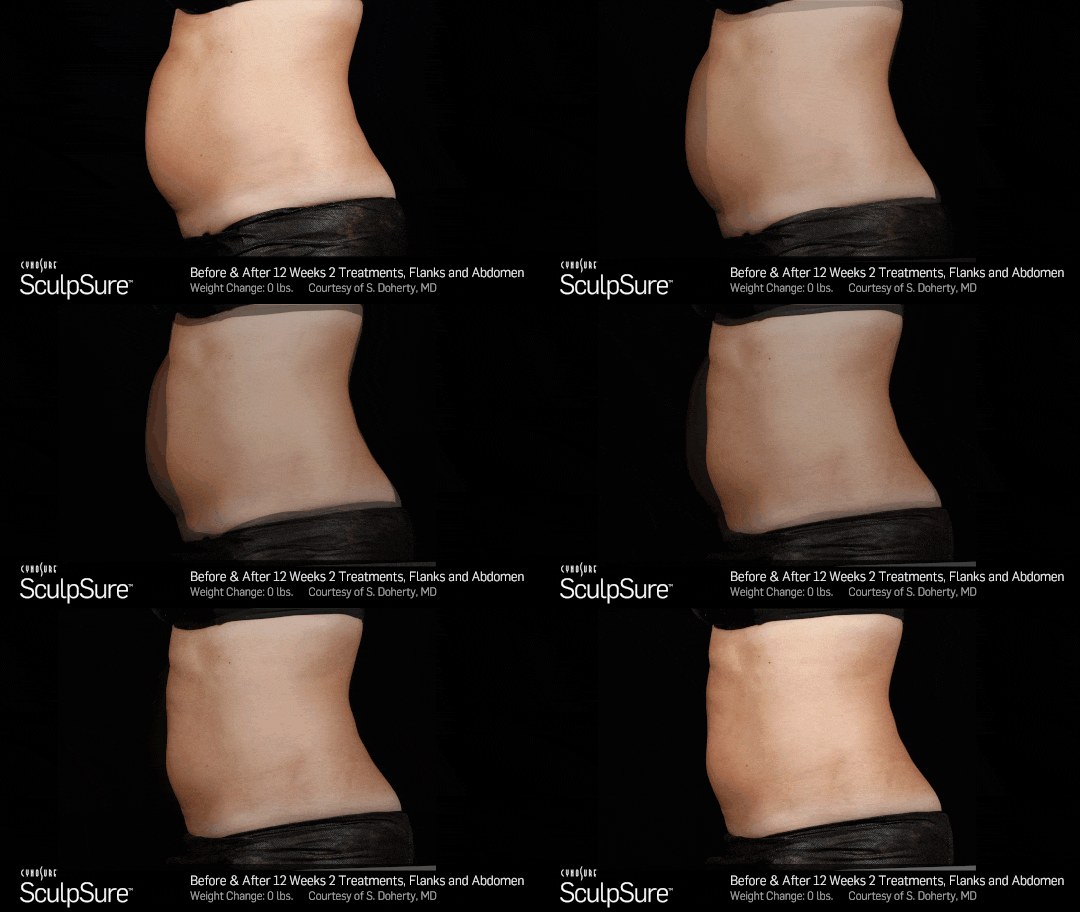
SculpSure, as a non-invasive treatment, typically requires two sessions to achieve the desired results. Each treatment takes 25 minutes and does not require any recovery time. Since non-invasive treatments like SculpSure or CoolSculpting depend on the body’s own mechanisms to get rid of fat cells, the results won’t be visible immediately, and it can take a few weeks. Full results from these treatments are usually visible after about 12 weeks post – procedure.
Compared to cryolipolysis, SculpSure has been associated with only mild tenderness rather than intense pain. Additionally, there have been no reports of SculpSure causing PAH. When considering a non-invasive fat reduction procedure, it is important to carefully evaluate the potential risks and benefits of each option and read reviews from previous patients.
Liposuction for Correcting PAH
Some patients who come in to discuss non-surgical body contouring do not want a surgical procedure. I respect this decision and simply make sure that they have realistic expectations about what can and cannot be achieved. However, many patients have a misperception about liposuction. They think that it’s a bigger deal than it actually is. While yes, liposuction is a surgical procedure that will require an investment in terms of recovery, it is also something that I routinely perform under local anesthesia and one where the incisions are so small that they often don’t even require stitches.

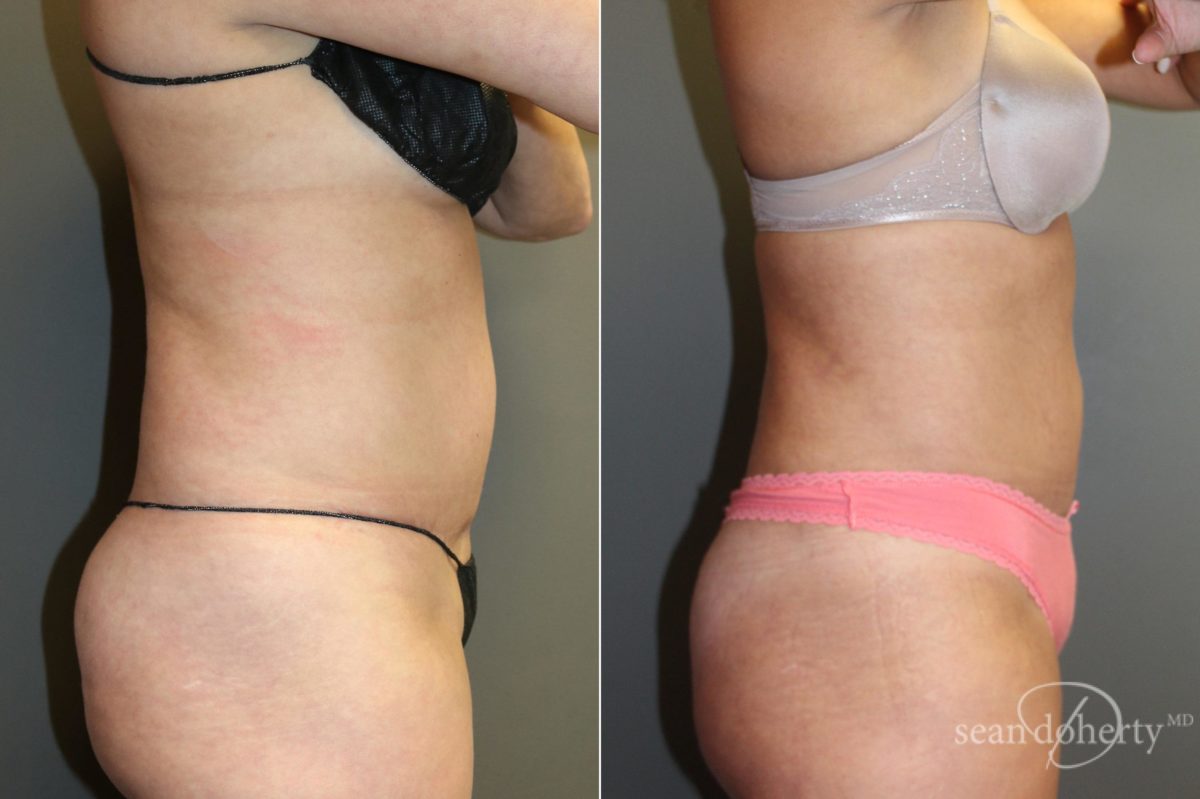
Liposuction is the gold standard in body contouring for a reason. It gives me the most precision and control. I can basically sculpt your body into a more ideal proportion. Furthermore, the fat that we remove can also be placed into other areas where you may have lost volume, such as the breasts. It is the ultimate in recycling. So, if you are concerned about PAH and are unhappy with the look of your body, come in to see me so we can discuss other options.
About the Author & Medical Review
This article was written and medically reviewed by Sean T. Doherty, MD, a board-certified plastic surgeon with extensive experience treating patients who have undergone cryolipolysis and managing both expected outcomes and rare complications such as paradoxical adipose hyperplasia (PAH).
Why this information is trustworthy for PAH and CoolSculpting complications
- Board Certified by the American Board of Plastic Surgeons with over 18 years of clinical experience
- Fellowship-trained in laser and energy-based fat reduction technologies, including cryolipolysis alternatives
- Medical Director and Principal Investigator for aesthetic device companies specializing in fat-reduction systems
- Published peer-reviewed research on non-invasive fat reduction and laser-assisted lipolysis
- National speaker and educator on aesthetic complications, safety, and corrective procedures
- Regularly evaluates and treats patients with post-CoolSculpting contour deformities, including PAH
- Recognized repeatedly as a Top Doctor by Boston Magazine and Castle Connolly
All information provided reflects current medical understanding of paradoxical adipose hyperplasia and is based on clinical experience, published research, and accepted standards of care. Because PAH requires individualized evaluation and timing before corrective treatment, patients should consult a board-certified plastic surgeon to determine the safest and most effective course of action.
To find out more about SculpSure®, liposuction, or any other surgical or non-surgical procedure with Dr. Sean Doherty at his Boston or Chestnut Hill office, contact us today or call (617) 450.0070 to schedule a consultation.